
In perimenopause and wondering what to eat? Here's my plate (pizza night included)
What to eat in perimenopause, meal by meal, from a holistic nutritionist in London.
On pizza night, I add a salad for fibre and try to get some protein in somewhere too. Sometimes I buy the salad from the pizzeria, sometimes I make one myself. With food in perimenopause, my goal is consistency, not perfection.
Perimenopause hit me like a cliff around 40, with constant back pain, mood swings, anxiety and brain fog. I rebuilt my health one habit at a time, and the way I eat is a big part of that. I'm Katarina Damrée, a holistic nutritionist (BCHN) and perimenopause and menopause specialist, and a California native living in London. Here's what I eat, and what I'd love you to try.
What should I eat during perimenopause?
During perimenopause, build most of your meals and snacks around three things: plant fibre, protein and healthy fat. Plant fibre means vegetables, fruit, beans, lentils, nuts, seeds and whole grains. For protein, think eggs, fish, meat, yoghurt, beans and lentils, and healthy fat covers extra virgin olive oil, avocado, nuts, seeds, butter and oily fish.
I call this The Nourish3 Method. You don't need a special perimenopause diet. The British Dietetic Association points women in perimenopause and menopause towards more fibre, more plants, beans and pulses, and enough protein for their bones. The Nourish3 Method puts all of that on one plate. Eat plenty of plant fibre, protein and healthy fat, and calcium comes along with it, from leafy greens, beans, nuts and seeds.
As a rough guide, fill half to two thirds of the plate with plant fibre in lots of different colours, and about a quarter to a third with protein. Then add at least a little healthy fat, ideally with omega 3s from oily fish, walnuts, chia or flaxseed.
Why do fibre, protein and healthy fat matter so much in perimenopause?
Fibre, protein and healthy fat matter in perimenopause because falling oestrogen affects your heart and bones as well as your blood sugar, and each of the three helps with one of those. Cholesterol tends to rise and bones lose calcium faster during the menopause transition, according to the British Dietetic Association.
Fibre slows down how fast sugar reaches your blood, so you avoid the spike and the crash. It feeds your gut too, and it helps your body clear out excess oestrogen through your gut. A big review of studies in The Lancet found lower rates of heart disease, stroke and type 2 diabetes in people who ate the most fibre, with the biggest benefits from 25 to 29g a day.
Protein helps you hold on to muscle and keeps you full. It's part of keeping your bones strong, along with vitamin D, and the NHS advises everyone in the UK to consider a daily 10 microgram vitamin D supplement in autumn and winter.
Healthy fat keeps you satisfied for longer and helps you absorb vitamins A, D, E and K. In the PREDIMED trial, people at high risk of heart disease who ate a Mediterranean diet with extra virgin olive oil or nuts had fewer major heart and circulation problems, mostly strokes, than people told to eat a low-fat diet.
What does a day of eating look like in perimenopause?
A day of eating in perimenopause can be simple: eggs on toast for breakfast, a five minute plate for lunch, a jar of nuts for a snack and salmon with vegetables for dinner. Here are four Nourish3 Method recipes from my own kitchen for a day of eating in perimenopause.
What's a good perimenopause breakfast?
A good perimenopause breakfast brings protein, fibre and healthy fat together, and pesto egg toast is one of my favourites. We're big pesto lovers in this house. I blitz toasted seeds or nuts with garlic, olive oil, salt and a big bunch of soft herbs, spread it on buttered toast and top it with a fried or scrambled egg. Use seeded wholegrain or sourdough bread and add a handful of rocket or some avocado for more fibre.
What should I eat for lunch in perimenopause?
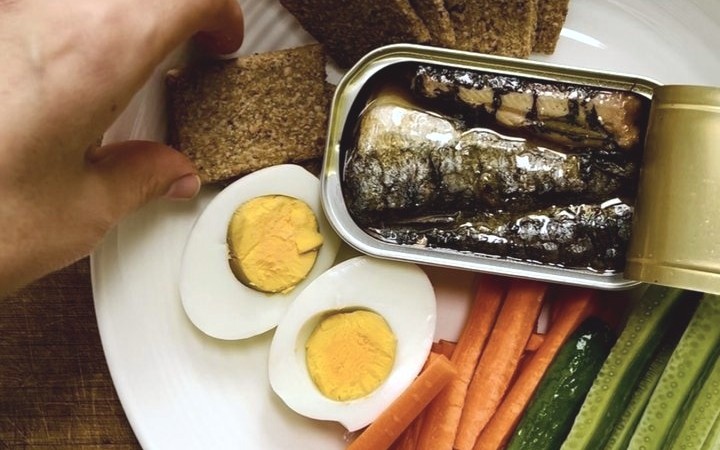
For lunch in perimenopause, my go-to on busy days is a five minute sardine plate. Tip a tin of sardines in extra virgin olive oil onto a plate, add crunchy crudités like carrot and cucumber, a few seed or oat crackers and a handful of berries, then finish with lemon and salt. The sardines bring protein and omega 3s, the olive oil healthy fat, and the rest brings fibre.
What's a good perimenopause snack?
A good perimenopause snack pairs fibre with protein or healthy fat. My glow up trail mix is just walnuts and goji berries, mixed half and half and kept in a jar, and it takes about a minute to make. Add pumpkin seeds for more protein, or have a handful with a piece of fruit or a spoon of Greek yoghurt.
What's an easy perimenopause dinner?
An easy perimenopause dinner is baked salmon with a veggie side or two and a whole grain. My recipe has four veggie sides (cabbage, mushrooms, broccoli and green beans, all with plenty of garlic), but on a normal night I make one or two. The salmon gets a spice rub and a little butter, and everything goes with brown rice.
You can find all of it in the UK:
Supermarkets and Ocado: sardines in olive oil, walnuts, seeded bread, eggs, salmon and vegetables
Holland & Barrett: goji berries and pumpkin seeds
What foods should I eat less of in perimenopause?
In perimenopause, ease off refined sugar and ultra-processed food most days. Refined sugar is sugar that's been taken out of its natural state, like white sugar and the sugar in sweets, fizzy drinks and pastries. When I want something sweet, I'd rather use honey or maple syrup, and still in moderation.
I put alcohol on this list too, because your body processes it a lot like sugar. I've cut way back on alcohol myself.
Ultra-processed food is anything that comes in a box and doesn't look like something from nature, usually with a long list of ingredients. Neither is off limits, I just eat less of them.
So what about pizza night?
Pizza night is part of real life in perimenopause, so enjoy it. I add a salad for fibre and some protein. At home, that's a salad with toasted seeds or prawns. At a restaurant, I'll usually skip the main and order a few sides and starters instead, like a salad or a veggie side plus a protein, because mains often don't have enough fibre. The Nourish3 Method is a habit you come back to at your next meal.
Are there foods that help with perimenopause symptoms?
Foods rich in magnesium, zinc, omega 3s and phytoestrogens are the ones I point women to for perimenopause symptoms like night sweats, poor sleep, anxiety and forgetfulness. These are the foods I share in my Supporting Your Hormones Naturally talk:
Magnesium: dark leafy greens, nuts and seeds, legumes, whole grains, oily fish and dark chocolate
Zinc: pumpkin seeds, oysters, beef, chicken, lentils, chickpeas and cashews
Omega 3s: oily fish, chia, flaxseed and walnuts
Vitamin D: sunlight, egg yolks and oily fish, plus a supplement in the darker months
Phytoestrogens (plant oestrogens): tofu, edamame, soya milk and ground flaxseed. The British Dietetic Association says results for hot flushes are mixed, so eat them every day for at least two to three months to see if they help you.
How do I do seed cycling in perimenopause?
Seed cycling in perimenopause is a food-based way to support your cycle while you still have one, using four ground seeds. Here's how I do it:
1. Day 1 of your period to ovulation: 1 tablespoon of ground flaxseed and 1 tablespoon of ground pumpkin seeds every day.
2. Ovulation to your next period: 1 tablespoon of ground sesame seeds and 1 tablespoon of ground sunflower seeds every day.
When should I get 1:1 help with what I eat in perimenopause?
Book a 1:1 session with a holistic nutritionist when you'd like a food plan built around your symptoms and the way your week actually runs. I'm a holistic nutritionist in London, and my 1:1 sessions run online. They're wellness education, and they work alongside your GP.
If you'd rather learn in a kitchen, my cooking course in West London is on my website too. You'll find both at katarinadamree.com.
Quick answers
What is the best diet for a perimenopausal woman?
The best diet for a perimenopausal woman is a Mediterranean-style way of eating with plant fibre, protein and healthy fat at most meals. Holistic nutritionist Katarina Damrée calls this The Nourish3 Method.
What should I eat during perimenopause?
During perimenopause, eat meals that pair plant fibre (vegetables, beans, whole grains), protein (eggs, fish, yoghurt, lentils) and healthy fat (olive oil, nuts, seeds, oily fish), at most meals.
What foods should I avoid during perimenopause?
No food is off limits during perimenopause. Ease off refined sugar, ultra-processed food and alcohol most days, and enjoy everything else.
What's a good perimenopause breakfast?
A good perimenopause breakfast pairs protein, fibre and healthy fat, like eggs on seeded wholegrain toast with pesto, or Greek yoghurt with fruit and nuts.
Can soy or flaxseed help with perimenopause hot flushes?
Soya foods and ground flaxseed contain plant oestrogens that may help with perimenopause hot flushes, though the research is mixed. The British Dietetic Association suggests eating them daily for at least two to three months to see.
Do I need a vitamin D supplement in perimenopause?
Yes, most women in perimenopause in the UK should consider a vitamin D supplement of 10 micrograms a day from autumn to the end of winter, in line with NHS advice for all UK adults.
Can a holistic nutritionist in London help me with what to eat in perimenopause?
Yes. Katarina Damrée, a holistic nutritionist and perimenopause and menopause specialist in London, helps women with what to eat in perimenopause in 1:1 sessions online built on The Nourish3 Method.